Address
Km 25 Owerri Port-Harcourt Road Imo State.
Work Hours
Monday to Friday: 7AM - 7PM
Weekend: 10AM - 5PM

Address
Km 25 Owerri Port-Harcourt Road Imo State.
Work Hours
Monday to Friday: 7AM - 7PM
Weekend: 10AM - 5PM
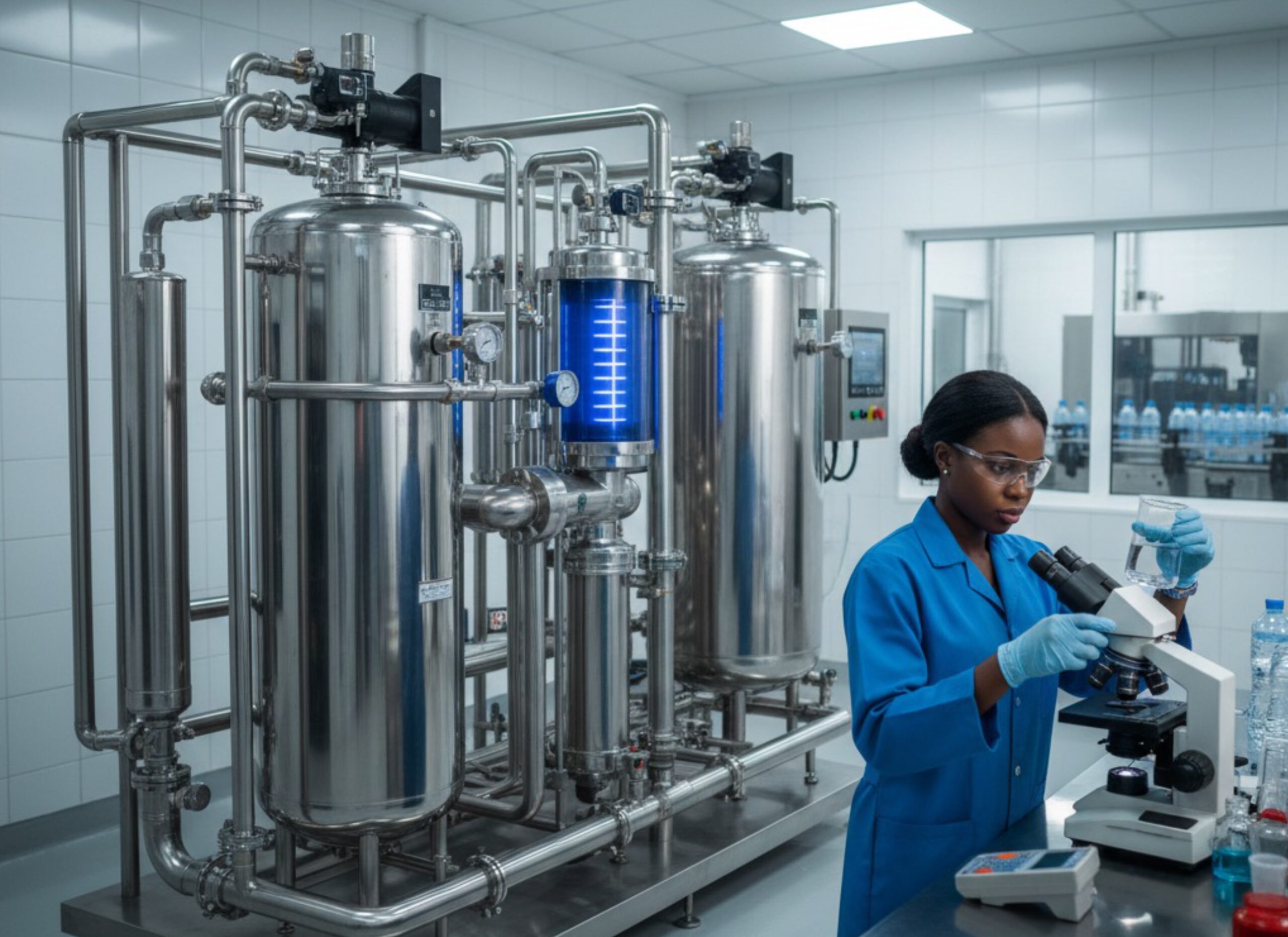
Why Quality Control Is Critical in Packaged Drinking Water Production becomes clear when we consider that access to clean and safe drinking water is essential to human health. In many communities, packaged drinking water such as sachet and bottled water has become a primary source of potable water. Because these products are consumed daily by millions of people, maintaining strict quality control throughout the production process is not optional; it is a public health responsibility.
Quality control in packaged drinking water production ensures that water is safe, hygienic, and compliant with regulatory standards. It protects consumers from waterborne diseases, builds trust in brands, and safeguards producers from legal and reputational risks.
Understanding Quality Control in Drinking Water Production
Quality control refers to the systematic processes used to monitor, test, and maintain the safety and consistency of drinking water from source to final packaging. It involves strict hygiene practices, proper water treatment, routine testing, and compliance with regulatory standards set by authorities such as NAFDAC.
Without effective quality control, packaged water can become a vehicle for harmful bacteria, chemicals, and contaminants that pose serious health risks.
The Role of Hygiene in Packaged Water Production
Hygiene is the foundation of quality control in water production. Even the cleanest water source can become contaminated through poor handling or unsanitary processing conditions.
Water Treatment and Purification Processes
Effective water treatment is central to producing safe packaged drinking water. Modern water production facilities use multiple treatment stages to remove impurities and pathogens.
Common Water Treatment Methods
Regular Water Testing
Routine laboratory testing is essential to confirm that treated water meets safety standards. Tests typically check for:
NAFDAC Standards and Regulatory Compliance
In Nigeria, the National Agency for Food and Drug Administration and Control (NAFDAC) regulates packaged drinking water production. Compliance with NAFDAC standards is mandatory for all producers.
Key NAFDAC Requirements Include:
Failure to comply can result in:
Consumer Safety and Public Health Protection
The ultimate goal of quality control is consumer safety. Poor-quality packaged water can expose consumers to serious health risks such as:
Business Benefits of Strong Quality Control Systems
Beyond health considerations, quality control offers significant business advantages:
Challenges in Maintaining Quality Control
Some producers face challenges such as:
Conclusion
Why Quality Control Is Critical in Packaged Drinking Water Production is evident when we consider that quality control is the backbone of packaged drinking water production. From hygiene and water treatment to regulatory compliance and consumer safety, every step of the process must be carefully managed.
Producers who invest in strong quality control systems not only protect public health but also build sustainable, trustworthy businesses. In an industry where consumer confidence is critical, quality is not just a requirement — it is a responsibility.

https://shorturl.fm/pRmvF